Catalog Ads are one of the most effective ways for e-commerce brands to advertise large product catalogs without creating individual ads for every item. Instead of building hundreds or thousands of separate creatives, catalog advertising automatically uses product information such as images, prices, names, and availability to generate ads at scale.
For brands with growing catalogs, this saves time and keeps product information synchronized. The challenge is that standard catalog ads often look exactly like the product pages they come from.
In this guide, we'll explain how catalog ads work, where they fall short, and how e-commerce brands can make them far more engaging.
How catalog ads work
Every catalog ad starts with a product feed. A catalog usually contains:
Product images
Product names
Prices
Sale prices
Availability
Product URLs
Categories
Advertising platforms use this information to automatically generate ads for individual products or entire collections. Instead of updating every ad manually, changes to the product catalog are reflected automatically.
Different advertising platforms use catalog data in slightly different ways. See how Meta Catalog Ads and TikTok Catalog Ads work in practice.
Why e-commerce brands use catalog ads
Catalog advertising is designed for scale. Rather than maintaining separate ads for every product, brands can launch campaigns directly from their catalog. This makes it ideal for:
Large product catalogs
Seasonal promotions
New arrivals
Dynamic retargeting
Frequently changing prices
Multiple product categories
As catalogs grow, automation becomes essential.
The creative limitation
Automation solves one problem, but introduces another. Most catalog ads simply reuse the same product images from the e-commerce website. Those images are perfect for a product page but often lack the visual impact needed for advertising.
Promotions, discounts, seasonal campaigns, and branded messaging all compete for space around an image that was never designed for advertising. The result is a feed full of catalog ads that look almost identical.

Building better catalog ads
The strongest catalog campaigns don't replace automation - they improve it. Instead of changing the product catalog itself, brands can create reusable templates that automatically display:
Product names
Prices
Discounts
Promotional badges
Brand colors
Campaign backgrounds
The product information stays synchronized while the creative presentation becomes much more flexible.
Why reusable templates matter
Creating a new design for every campaign quickly becomes repetitive. Reusable templates allow marketing teams to build a layout once and automatically apply it across products or collections.
The same template can be reused for:
Sales
New arrivals
Seasonal campaigns
Product launches
Category-specific promotions
When product information changes, the creative updates without rebuilding the design.
Keeping website images untouched
A common misconception is that better catalog ads require replacing the images on an ecommerce website.
Modern creative automation platforms generate separate advertising visuals while leaving the original product photography untouched. This allows brands to introduce promotional layouts, backgrounds, and campaign messaging without affecting the online store.
How Flow fits into the workflow
Flow helps e-commerce brands automate the creative side of catalog advertising. Product catalogs are imported from Meta Catalogs or CSV/XML feeds, then combined with reusable templates to generate advertising-ready visuals.
Users can start with ready-made templates or create their own inside the editor. Instead of redesigning products for every campaign, they build a creative system that scales with the catalog.
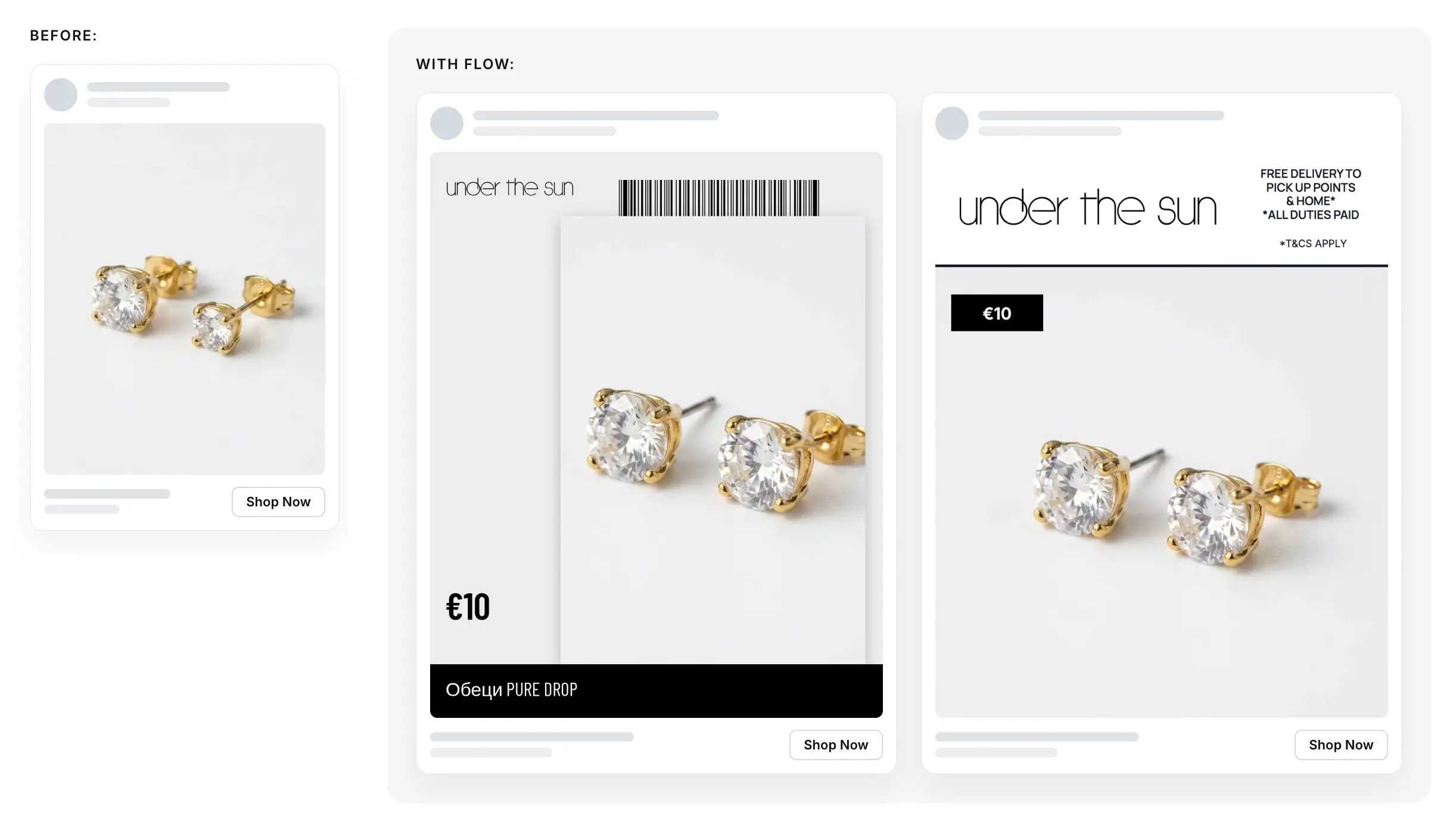
Example of a Meta carousel ad by Under The Sun
Final thoughts
Catalog ads make it possible to advertise thousands of products without creating thousands of individual ads. The brands that get the most value from them combine accurate product data with reusable creative templates, allowing campaigns to stay visually engaging while product information remains synchronized.
As ecommerce catalogs continue to grow, creative automation becomes just as important as feed management.


Join The Newsletter
Stay ahead in catalog advertising
Get practical guides, product updates, new templates, and best practices for Dynamic Product Ads, creative automation, and ecommerce marketing.
On this page
Related articles



Launch catalog ads with ease
Ready to launch better catalog ads?
Turn product catalogs into publishing-ready creatives in minutes.